
Holistic Betrayal Recovery

We are talking about spiritual gifts of betrayal as well as holistic betrayal recovery, the idea of what is holistic betrayal? How are we recovering in all of the ways instead of part of it?
Welcome to Wellness. In every season, we talk all things wellness, to help you align yourself, align with your goals, find balance in your life, and just recalibrate yourself if you are listening for the first time. Welcome, welcome. I'm so glad you're here, and let's get started in the rest of the podcast.
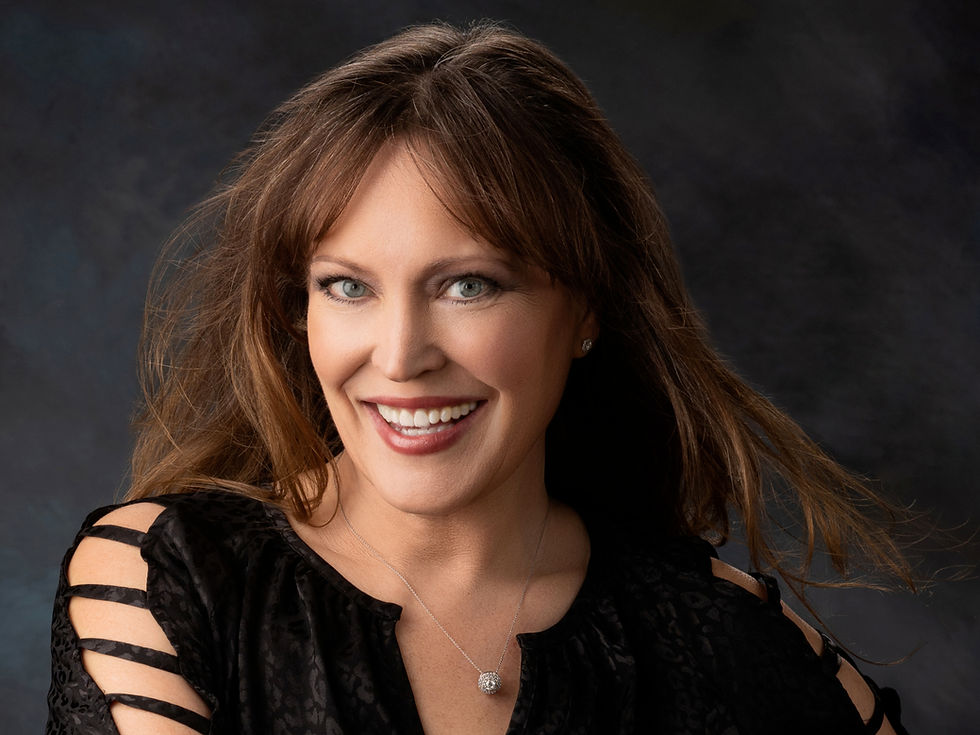
Today I have with me Lora Cheadle, the name of her business is called Life Choreography Coaching and Advocacy. What comes to mind to me is dancing, right choreography and the idea that things should be in balance and kind of at the right timing.
I'm curious what comes to mind for each of you As you're listening, just take that pause and what do you think of with choreography and how much easier does that sound for me? It's that extra breath out, like extra exhale and that moment of this is the way my life should look. So I love the name of her business.
Let me tell you a little bit about her. And I already love her because she had such a huge life pivot and it's that reminder that we can have that life pivot. So she became an attorney because she was passionate about justice, and after burning out, she walked away and moved into the wellness space, which was very satisfying.
And I could tell as soon as we got on just getting, if you're looking at video, look at her glow. So that tells you right there, but it didn't always fix. Yeah, but she's saying it didn't always fix what people were dealing with. She became a clinical hypnotherapist, somatic attachment therapist, yoga fitness instructor, and learned integrated energy therapy and became a mind body spirit coach.
Can you tell by all of the different certifications that she has that she was on a journey for her own healing? These are the best people to interview, because they've lived this. So for you who are struggling, tune in. If you know somebody else who's struggling, share this right away. Just hit pause, share it, and then play.
So Lora, thank you for being on. I'm very excited. We've already talked to somebody else about what hypnotherapy is, so we know what that is, but we don't know what somatic attachment therapy is. And we don't know what mind, body spirit is, and we don't know what integrated energy is.
So whichever one of those you wanna start with, we are all curious. What is this?
I am.
Help me with this.
Yes. And I'm so excited to share.
Let's start with somatic attachment therapy because you were talking about dance and that's what life choreography is all about. And somatics just have to do with the body moving the body.
The idea and the concept that we flow emotion, we flow trauma, we flow joy, we flow our emotions through our body. So that's what somatics is. Somatic attachment is just talking about the attachment styles and really focusing. If I've got an anxious attachment style and I feel really needy and I can be really clingy and I'm gonna lean in and I'm gonna do all these different things, how can I take that more anxious energy and flow it through my body so I can create calm?
Similarly, if I have like a more avoidant attachment style and I'm a little bit walled off and I'm on my own, how can I soften and open the front of my body, soften my belly, relax my thighs, so I might be more open to relationships and to connecting. So that's what somatic attachment therapy is.
I love it, and I knew what Somatics was, and I've talked about it in different ways, but the attachment part, so interesting.
Are there people who are a mix of both?
Yes. We all have areas of our life where we tend to be avoidant, areas where we tend to be a little bit more anxious, areas where we're completely balanced. But the somatic attachment therapy is really focused on how to be relational in every single moment.
And it doesn't matter if it's personal or professional, what do I need to do to calm my body, to calm my nervous system and to create a more positive, harmonious interaction wherever I go.
Even just hearing about the concept of it, I feel a little more regulated.
Yes, yes. Isn't that the truth? Because it recognizes that we all get keyed up, we all get anxious, we all wanna be loved and accepted, and it's okay.
Just calm, relax, be present with ourselves. That's the best place where we can really start.
And actually, I just recorded some solo episodes that talk about that.
I live in such a society where we're go, go, go, do, do, do. So the moment that we have space to breathe, it's one of those, wait, I should be doing something.
What's the next thing that I should be doing?
Yes.
I'm sure that's a lot of the clients that you're seeing right now because it's so ingrained in us and it's honestly dangerous.
Yeah. I'm glad that you did some episodes on that because yes, you're right. It is ingrained in us. How many times do we say, I didn't get anything done this weekend.
I'm so embarrassed I didn't. And it's like, oh, whoa, whoa, whoa. Wait a minute. Who says we have to be productive every minute of every day? Why do we glorify, oh my got so much is done. Who really cares? How do you feel? That's what matters.
And really, when we look back on our life, that's what we remember is how we felt.
Mm-hmm.
We're not gonna remember our checklists.
No,
no. If we do, we shouldn't.
There's not a lot of joy in that.
So tell us what is what's learned integrated. Energy therapy.
The integrated energy therapy, is similar to reiki. It is sometimes hands on, sometimes just hands off processing and moving the energy.
So it's me connecting with your energy field. And listeners, even if you're not seeing me right now, I just want you to imagine that I have my hand, right over your heart, just softly right there. And just feel that heat, feel that presence. And now imagine that I'm turning little circles, just a little clockwise.
Circle over your heart with my hand, and just imagine, and you can feel that energy just lightly shifting, lightly stirring. Now as you're feeling that, imagine me pulling my hands slowly away from your heart, expanding that energy, expanding that glow, opening your heart, and then if it feels right and it feels peaceful, you can settle your own hand over your heart.
Just take a breath and feel that shift. That's what that integrated energy therapy is, is it's bringing our attention to our energy centers, to the power that we are generating. I'm not generating your heart energy, but I've just brought you into communication with that heart energy, just by that focus, and that's what Integrated energy Therapy is all about.
That's amazing. And the episode, I think it's right before yours is Ricky, so
perfect.
Where are the other energy centers?
There's different energy centers all over our body. The ones that I really work with the mind, because we tend to live in such a thought based society. So like the forehead, the front and the back of the head.
There's a lot of mental energy there. Then the throat, when we don't feel free to express our truth, the heart dropping down the solar plexus, like right between your ribs, that is the seed of our autonomy and our power, and it's easy to feel diminished and collapsed. Like I don't have any choices. Then the gut.
Those are the main power centers. I mean, like I said, there's so many, but those are the main ones that I deal with because how many of us have gut issues or throat issues or headaches? A lot of times that's just coagulated energy that is not able to flow.
That all makes sense to me, except this one's new.
Interesting.
For those who are listening, I realized,
yeah,
if you wouldn't know where I was touching.
Yeah.
The
heart
is this different, the back of the head than the chakras.
Yeah, the brainstem is back there. That is the survival portion of our brain and we spend a lot of time activated, being in a fight flight or freeze area, and that is where that energy back of the neck, that threat, that charging in, that's where that back of the head energy really tends to come into play.
Interesting. Yeah. I'm gonna to spend some time after this. Just meditating on that.
Yeah. And, noticing, you know, if you're stressed out and all of a sudden Oh, that really dysregulated me and I'm, notice what you start feeling at the back of the head
How different is that from my favorite pressure point in acupuncture is right here at the top of the head.
Mm-hmm. Is
it similar?
It's similar. Mm-hmm.
Interesting.
Yeah.
Okay. I'm seeing how your different certifications layer and how they have this like home together.
What is the mind, body, spirit coach? I know that so many people in the wellness space talk about this.
Yes.
I've never talked about it on my show or had anybody else really talk about it.
So what is this?
Oh, I'm so excited to talk about it. I, was a dancer. I danced my whole life. I love dancing, I love movement. And I actually started teaching fitness classes in 1988. So I've been teaching fitness in one form or another for, it feels like a hundred years.
And what got me so frustrated about fitness was the focus on the physical body. And it was bigger muscles, or skinnier waist and skinny thighs. And there was very little focus on, but how do I feel? You know, it was all on, what do I look like? So the mind body spirit certification was connecting with your body.
How do you feel? Where is your power? What can your body do for you? Why do you wanna stretch and be flexible? If you're flexible in body, can you be flexible in mind? Even if you're a size, I don't know, 18 and you're still fit and happy, shouldn't the focus be on your fit and you're happy? Not what number clothing you fit into.
So that's what that certification did. It brought together all of the aspects of what does it mean to be fit? Because what it means to be fit is not how much weight you can lift, how long you can, be on this chair, and has to do with your relationship with your body.
So my degree is, my undergrad is in applied health. And we talked a lot about that in my degree path, and there was a study done that was,
it's hard to put into words for me. It was so impactful for me because I grew up in the nineties. I, I'm born in the eighties, but I grew up in the nineties, if that makes sense. And for those of you who don't remember the nineties or weren't around, this was the time when famous people were interviewed saying, I noticed you gained weight, or I noticed you lost weight and you could have gained or lost five pounds.
Ridiculous. They expected people to be almost skeletal. Honestly, the people who were what are they called? The runway models? Runway models literally looked like skeletons, like terrible. And let me tell you that when you are too skinny, it's not good for your life. It's the same as when you're grossly overweight.
It's the same idea. It's not good on your organs. Anyway, grew up in the nineties, this is what I'm used to. I'm, when I'm around toxic family members, they're constantly pointing out other people's weight even though they're not the ideal weight. And it's not just ideal weight. They're not healthy, they're not, they're very sedentary smokers, whatever.
There was a study done and it was a very lengthy study. Lots of people in it, long amount of time that they did it, and they, that there is such a thing as skinny fat. These are people who are naturally thin, but they don't have enough muscle mass. They're, it's all fat. They learn this by doing DEXA scans.
These are the scans that are done when you're older. If you want insurance to cover it, you need to be like Medicare age and these scans are checking your bone density, but they can also see your muscle mass with it. So they're really cool. So they learn this thing called skinny fat. And then they learned that there's also people who look obese, but they're actually fit isn't.
Doesn't that just blow your mind that there are people who are healthier than you, but they don't look like it? And it brings to mind how many people do you know that look healthy but they have chronic pain, chronic disease, something chronic going on where it's because of whatever they have that's chronic, that they look healthy, but they actually are in pain.
Or maybe their mental health isn't right. So they're not in balance. And learning about these concepts through my undergrad really rewrote and unwound the way that I was raised by society as well as my family. So that's something to sit with and think about right there. And I was friends with somebody who she told me off on the side and during a very vulnerable moment that she suffered from anorexia and bulimia, but mostly anorexia, and she was in recovery and she was asking me for some advice.
She wasn't sure whether to tell her leader that this was going on. We were in a volunteer setting she was asking me as another leader, and my advice to her was, don't focus on the calories. This was her first time away from home, so her mom was really worried. Focus on how you're feeling when you close your eyes and you really tuning in with yourself.
Do you feel like you're in balance? How you feeling good about yourself? And then focus on getting the nutrients like whole wheat bread instead of white bread, stuff like this. And this was before I had even gone down my degree path. So it's very interesting, the things that you naturally know tend to be right.
Mm-hmm.
So tell us a little bit about your career path and what led you to switch from, you said burnout from being an attorney. To going down this path. It sounds like a lot of this was for your own healing, and then at the end of this, I would love to get to the point of how do you help people get there faster?
Because I'm sure it was a longer journey than now people who you coach.
It as you said, it's an interesting mix of, wow, this was so perfectly ordained for me and I never saw it coming. I practiced law like you said, because I was a really big believer in justice. I was passionate about that, and to be an attorney means you have to work really ridiculously hard hours.
And although I was down for that, I thought it was gonna be fine. I hit this point where I had two kids, 22 months apart. And three out of four of my grandparents were in various stages of dying. One had cancer, one had Alzheimer's, and one had COPD. And my husband's job was a traveling job. And it was just one of those things where it was like, I can't do this.
If I do it, I am gonna be so stressed out. My mental health is suffering. It's so frustrating because, you know, our healthcare system, it's not great. The daycare system, it's not great. It's not easy. And I decided I really need to walk away. I need to, for so many different reasons because it's breaking me.
And I thought, this is fine. I'm burned out. I've been always passionate about wellness. I'm gonna move into this and it's gonna be a great job because I can balance it better with kids, with a traveling husband. All of that stuff. And I loved it and I thought, this is my calling.
This is absolutely everything that I've ever wanted to do. And like with anything, there's frustrations and you realize places where you could do some more healing on your own. Throughout this whole time, I thought I had a really good marriage, and for the most part I did.
But there was just constant frustrations. My husband comes from a very abusive, traumatic background, foster care, poverty, like all the different things, and it was just really exhausting living with somebody with PTSD and it was making me traumatized being with him all the time. But I thought I was doing a really good job.
I thought I was managing it well.
When my youngest was about to graduate from high school, I thought, this is it. We've made it. It's about to get really good right now. And that's when I found out that my husband had been cheating on me for 15 years.
With a multitude of women, some one-offs, some long friendships where they slept together every three or four years, and it gutted me to a level that I have never been gutted because it went to my identity. It broke who I thought I was.
Everything that I had prided myself in, being good and kind and you know, working for the marriage and a mom and all of that. It blew up in my face and it was like, why did I even try and who am I? And it raised every single insecurity. Now, fast forward because it was a long, hard healing, my husband and I are still together.
That breach, that collapsing of everything was the straw that broke his back really. He finally had to go lean into wellness to take care of himself. He finally had to go to therapy. He had to address the PTSD, he had to address his work workaholism. He had to address his own wounded self, why he thought cheating was an option.
So we each really broke and had to do our own healing at that point. And then we ended up coming back together as two completely different healed hold people and have rebuilt the marriage after that. And although it was by far the worst thing I have ever experienced in my life, it was also the thing that brought all the pieces of a puzzle together.
It made me apply all of these tools. It's not just theory. I learned great things. I had to do it because I couldn't eat, I couldn't sleep, I couldn't get up. I couldn't stop crying. It really challenged me to be, and to do all of the things that for all of those years I had been just teaching and had never really had to apply.
For anybody who might be feeling triggered, what do you recommend right now?
Acknowledging that you feel triggered, being able to say that to yourself. Wow, my palms are sweating. Ooh, I've just noticed that my back is tightened and my breath, it's gotten shallow. Ah. Maybe I can choose to relax my shoulders.
Maybe not. That's okay. I am just noticing them. Maybe I can see if my breath can deepen a little bit, or maybe I can tap my legs, shake my legs out a little bit, and just be present with what I'm feeling. And then also notice the stories in my head. What am I saying? Oh, this reminds me of, oh, what if this, where's your mind going and can you bring it back to this conversation?
We're having a conversation right now.
Love it. Perfectly done.
Why did you decide that you needed to lean into wellness and he needed to do therapy rather than going to couples therapy?
If I knew then what I know now, we did start going to couples therapy, but it was enormously triggering. The first therapist we met with was not trauma aware or trauma informed, so it was not healthy for either of us, and the focus became communication skills.
And how can you be a couple? It's not about the couple, it's about the individual. My husband cheated because he had no coping skills. He was experiencing severe post-traumatic stress. He had a self image issue. He had his own unaddressed, unresolved trauma. That was about him. That's not about me. I was a perfectionist.
I was performing in my life. That's about me. That's not about him. We have to do the individual work before we do the couple's work, because a couple is built from two healthy whole individuals.
Love it. Thank you. And then
hindsight, right? It's so much clearer.
What do you wish you had done? If you're just now finding out again, what would you do differently or what would you recommend?
When you go into fight, flight or freeze, you do just that. You will fight, you run or you completely shut down.
And I would bounce between all of those. One moment I'm gonna see 10 different attorneys and I'm gonna rewrite my will and I'm gonna get a new, you know what I mean? And then other days I can't get off the floor. And in hindsight, I would've focused more on how do I reregulate my nervous system?
How do I just stop and not solve problems right now? How can I nourish my body because I couldn't eat, I was nauseous all the time. How can I sleep? I couldn't sleep. I would focus more on me and not figuring out why, why? What should I do? And just being more present with myself.
How do you turn off the whys for people who are stuck right there?
It's really hard. I wanna acknowledge that first. If you're stuck there, there's nothing wrong with you. I was stuck there. So many people get stuck there. That's okay. Here's some of the things that you can do. The reason we get stuck is the brain opens up a loop and then it starts scanning the environment.
How can I solve this? How can I answer this? How, how, how, how, how, how, how? What are the things that you can do that can close that loop? How can you answer that for yourself? You don't always need the quote unquote right answer. Usually there isn't a right answer. Why did this happen? Perhaps it's because of X, Y, or Z.
And if you can't even get there. Perhaps this is happening for my own best interest and the highest good. Perhaps this is something that my soul planned. Perhaps this is something that's going to serve me one day and just answer the question for yourself. Because when you answer the question, you close the loop in your brain and you can have a moment of peace.
What would you recommend? Absolutely do not do?
Oh my goodness. I think there's many things. I think first and foremost, if it's infidelity or any significant trauma promise that you're not gonna make any decisions for a year. There's a lot of decisions that will impact your life.
You don't need to make those decisions for a year. Give yourself some time. Now, obviously if your health, if your wellbeing, if there's something going on, yes, take care of that. But if you can give yourself some grace and space and slow it down, that will give you the time to address things fully so you don't bypass, so you don't make decisions that you regret.
Give yourself time and also get help. There is so much shame. I had this crippling belief. I must not be pretty enough. I must not be smart enough. I must not be sexy enough. I must not be a good enough wife. I must not be a good enough mom. Oh my God, I can't tell anybody. What are they gonna think of me?
I took his shame on. It says nothing about me. Getting help was the hardest thing I ever did because I thought it was going to mean I was a failure, and people would judge me. Find that safe space. Get hope People can help you get out of your own way and can speak truth into you when you have lost the ability to find truth within yourself.
There are so many. Let's look to Hollywood to start with that have been, there's so many people that have been cheated on where you're like, they are absolutely dropped dead gorgeous. Why would they be cheated on? So if those people can be cheated on it can make sense.
What else would you say to people who are stuck in that to help them see that? No, that's not true.
When people make decisions, they make decisions based on who they are. If I choose to steal or lie or cheat, it's because of who I am. It has nothing to do with who you are, and we tend to internalize and we tend to personalize. But if you can zoom out just for a minute and think about the times you have done something wrong, we've all done something bad at one point or another.
We do it because of what's going on inside of us. We do it because of our own pain. We do it out of pain. All bad behavior truly is born from our own pain. So it's about the cheater. It's about the betrayer, it's about the liar.
It has nothing to do with you at all.
I love it. My mom would, one of her quotes that she said a lot to me growing up is Hurt people. Hurt people.
Yes.
If you look back at history, like even history within family members, it's so true.
Yeah.
And if you look back at your own life when you've made terrible choices, what are the chances you were hurting?
Pretty much all the time. Yeah.
Wow. So this already went super deep. This is what we're talking about.
So what are some of those spiritual gifts?
I think the biggest one is that true creation of your identity. I know who I am, people can judge me, they can misjudge me, they can love me or hate me, and it doesn't change who I am.
And I think for so many of us, for so long. How we feel about ourselves is how other people see us. If people like us we're like, yay, I'm doing so good. And if people don't like us, we're like, this is just terrible. It's the gift of this rock solid identity of who I am. And when I say who I am, I really mean that I am.
I am a soul. I am a spirit. I am good. I am kind. It's not about my titles. It's not about, my size. It's not about how much money I make. It's about this incredible spiritual being that I am. And that is so powerful and so beautiful, and it creates such a deep level of peace because I know myself and now I'm comfortable showing myself and judgment doesn't impact me.
Then my ability to trust myself is so much higher because I'm not seeking to please, I'm not proving my worth. I don't have to perform anymore. I just get to be me, and it feels incredible.
So much came up with that for me.
Yeah.
Thinking about how different it would be for your life, for everybody listening if we're doing the work on ourselves from the beginning, we're starting today.
Yeah.
It adds that buffer for when hardships come because in this life we have obstacles.
Oh yeah.
And I just record a podcast episode. It's going to come out a month from when this one goes out. That is about. The importance of having solo travel and spending time alone. And it sounds like that was super important for you to be doing the work with a therapist and also having time alone.
I'm sure you did journaling and a lot of other things that helped you to reflect on who you are, separate from your family, from your work, from whatever other labels that you have. Yeah. When I'm away from all of this and I'm by myself, who am I? What's really at my core? Separate from all the, if you think of Shrek, all the onion layers.
So what else?
Yeah.
I think there's also this oneness, almost betrayal has been, it's a human condition. If you go back, even, you know, in the Bible, Judas betraying Jesus started it all. We would not have any other story if it wasn't for Judas. True. And look, throughout history, all the betrayals are always catalysts, and they're always catalysts for pretty amazing things.
It's not that everybody chooses to take that catalyst and rise sometimes. Yeah, the catalyst happens and people crumple, but it's the catalyst and just knowing, wow, I have been gifted this catalyst. What do I get to do with it? Because absolutely I can crumple and I can shrink, and I can spend the rest of my life bitter and hateful and a victim and telling everybody how awful it is.
That's my choice. Or, wow, I can use this fuel to really rewrite the narrative for myself. I mean there are pivotal moments, but this is such an important pivotal moment, and why not make the most of it?
So it sounds like this could have happened for your husband a long time ago, but it was delayed.
So it makes sense that he self-sabotaged and he sabotaged the relationship. So think about this for yourselves. For all of you who know in your core, you need to do some healing and you've been putting it off. Because if you look back, she said that her husband was betrayed in his childhood with all the abuse.
He was absolutely betrayed. Do you have work to do that you've put off from when you were betrayed? And it can even be when you were a child. You are absolutely doing things in your life that are sabotaging and you can be betraying yourself further because he absolutely was betraying himself, not just his family, and I'm saying family because he betrayed his children too with this.
So there was a lot of work that was done with the children as well. And I just wanted to take a minute to talk about that because there are so many things in our lives that we have had maybe betrayal with a lowercase B, and we haven't taken care of. And there's trauma associated with that as well.
So what's the next gift?
Yeah, you led right into it with what you said, it's that ancestral layer. It's that, fire line from the past to the present to the future. And yes, there was a lot of betrayal in his family. And he came in and he passed it on. And it wasn't until this all broke that the awareness came that, whoa, no more.
We are doing the healing now. We are not passing this onto our kids. We're addressing it. We're talking about it. And what's actually beautiful about this too, his relationship with the kids is better now. Because before he was defensive, before he was protect protective of him himself before he had something to hide.
He couldn't be vulnerable. So he's a better father. And going back to his family of origin. Now he is uncovering all of these things because he's talking about the abuse. So now he's talking to other cousins and they're sharing their abuse stories. And they just got together about two months ago, a bunch of cousins.
And I mean, it's horrific abuse. But these cousins are saying, I never spoke of this. I thought I was the only one. And it's creating ripples of healing through the entire extended family because all of these humans, these beautiful humans, thought they were alone. There was a lot of sexual abuse.
They thought they were being abused because they did something wrong, because they caused it. And most of the people are in between age 40 and 60, they're realizing for the first time ever, no, I didn't cause this. No, I wasn't alone. And I've got to start addressing this.
I wanna take another minute right there.
If you have any moments in your childhood that are like this, I want you to look at it as an adult and it's not you that it happened to, it's another child. Would you blame that child? Once I was able to look at it that way, I was able to have justified anger instead of the shame and I was able to have healing from it that way.
And then of course I needed to heal the anger part, but it made a huge difference for me to be able to let go and be like, no, no, no, no. I would not do this to my children. Like how dare you? This is absolutely wrong. And I was able to do that inner healing, the child part of the inner healing
it's a lot of work and some people call it shadow healing as well. There's a lot of different terms for it for those who are listening. And what's interesting is I interviewed, I can't even tell you how long ago Betrayal coach, and she said the same thing, that both of them have a better relationship with their children than they did before.
Obviously they do as a couple, but it was amazing to realize that they do with their children. And what shocked me from what you were saying is that the cousins. So it definitely shows that it went back several generations.
Yes.
And it makes me wonder if I spoke to my cousins what would come up as well.
Very interesting. So I hope other people who are listening they take that opportunity.
Then another thing that came up for me, I don't know how many of you have heard of Brene Brown. But she has some really great quotes about shame, and I'm totally gonna butcher this quote, but when you share whatever big secret you've been hiding, once you let it see the light of day, you no longer have shame about it.
It's when you're hiding it. And I told you, I'm not even paraphrasing it correctly, so you guys can go ahead and email me with the correct quote if you really feel like it. But it makes such a huge difference. And I'm curious how that was for you. And then we'll continue down the spiritual gifts.
Yeah, absolutely. Because you start sharing it and. You receive compassion from people, you receive understanding from people. And in my mind, it was this huge, enormous monster out there. And you share it and you're like, oh wow, that wasn't that bad. Oh wow. People relate to that. Oh, it's not about me.
And it ends up validating. No, it's not about me. And I'm okay. And it's not that this is not a big deal. Of course it's a big deal, but it's not my fault. I'm not a bad girl. I'm not a failure. I'm not wrong. It just happened and things happen and it's okay.
And I think that even goes for the other side. If any of you are listening to this and you are the one who is being unfaithful, and this could be in intimacy, this could be financially.
There's so many ways to betray if you're the one doing this. Then it shows right there that you need to start sharing it. Let it see some light, and you will start to find the help, because that is the biggest thing. It isolates you. You feel lonely, you feel depressed. You can't see your way through. You keep falling off the bandwagon when you're trying on your own, and you can put this through several different ways in your life that this makes sense that it just makes such a big difference when you start opening up.
Yeah. My husband, when he started sharing and we started talking, I mean, it's not easy. It is embarrassing. It does create shame, but the relief he has felt, it's an enormous weight off of his shoulders so many people when he has shared the story, have nothing but compassion for him and understanding for him.
And of course there's people that are unhealed themselves that then say, how dare you and get very angry, but that's their wounding without fail. The people in our lives love him more and accept him more for his honesty and for his bravery in standing in here and doing the work.
And he gets to be the example for other people of, I need to do some work, even if they're not struggling with the same thing.
Mm-hmm.
So that's a spiritual gift right there.
Yes, it's a huge gift.
I think there's also a gift of understanding that everything truly can be for our benefit. That life has a lot of twists and turns and ups and downs, and we really can use it to our benefit. And when we humble ourselves and grow and ask, what is in it for me?
What can I learn from this? When we approach life from that state of curiosity as opposed to moral judgment, it gets really good. And that is a huge gift to not judge others. And along those same lines, people will so often say to me, do you forgive him? Or was it hard to forgive? And I like to say, I don't feel like I am in a position to forgive or not to forgive.
I'm not the moral judge of anybody. I feel more like it was acceptance. I had to get to a place of acceptance that he made these decisions. That he was hurt, that he was broken, that it impacted me, but it impacted the kids. And I can accept that all of that happened. And because all of that happened, there were a lot of positive ripples.
He needs to forgive himself. But I do not morally sit above him in judgment. I can forgive myself. He can forgive himself, and we can find acceptance and peace with each other.
You just answered what I was gonna ask was it about forgiving yourself?
Yes. Yeah.
Are there any more gifts?
You know, there's probably a million more small gifts, but I think those are the big ones.
Wow. And then what was, we were gonna lead this way. Oh.
How is it that you help people faster than you helped yourself because of course you had to go on this journey for yourself first.
Yes, I did. I think the way that I help people the most is I make it about you. I soften it and I make it about your awareness of yourself.
It's not a couple's issue, and it's easy to say, well, he cheated. It's his problem. He did it. Yes. And maybe he can be working on himself, but if there were something to work on in you, what might it be? Well, nothing. I did everything right. That's wonderful. So let's start looking at the ways maybe you betrayed yourself.
You didn't have solid boundaries, you didn't follow through. You played the bit of a martyr. You were a bit victimy, you sacrificed yourself. Let's start looking at those things because life is a mirror, but if there's betrayal externally, let's look within and find out where there's betrayal going on internally.
And I think that's even more important for this question of what are some indications that you might need to start having some of these conversations? And how do you even start them with your significant other?
It's hard to start them. Because there's so much fear, there's so much shame, there's so much defensiveness that comes up.
If you look at the stats, it's actually terrifying. It's like 70% of relationships have some sort of infidelity now, defined infidelity. It can be looking at porn, it can be chatting with somebody on Facebook. It can be a full blown sexual affair. It can be so many different things, but the fact of the matter is a lot of people are engaging in behavior that the other person doesn't know about, and I think a really good place to start is to get curious, not from a place of judgment, not from, if you ever cheated on me, you know what, I would do nothing like that, but just to have some softening to maybe share a story of a time when.
Somebody cheated on you. You cheated on somebody else. I cheated on a boyfriend in college. You know, it's something that many people have engaged in behavior that is not perfect and just have conversations around. What did that feel like to you? When I did this, I was feeling scared.
I was feeling broken, and just to have some very general calm conversations around what it means, self betrayal. When I cheated on my boyfriend in college, I did it because I was terrified. I was afraid. I didn't know how to communicate and I thought he was gonna leave me. Those were my reasons. Let's self-reflect on our worst times and get vulnerable and share with each other.
That's honestly the best place to start is with you.
And it sounds like that goes back to the beginning of a relationship. And what can go wrong is losing that vulnerability throughout time.
Because we love our partners and we wanna look good in their eyes, but then we lose that fear, we lose that vulnerability.
And we also, it's natural to evolve. We are not the same person as when we first started the relationship. And sometimes the problem can be is that one of us evolves and the other one is left behind.
Mm-hmm.
So we need to make sure that we're continuing to evolve and update what's called our love map.
So our own map of the person as well as ourselves.
Yeah.
And that comes with that still being vulnerable and that communication and making sure that you're sharing with each other those things. I feel like that is a great preventative measure.
Yeah, it is. And then also when we don't know the answers to share that too, I feel like I'm changing.
I feel like motherhood changed me. I feel like I don't know who I am anymore. This is what used to be important. It no longer is, I used to feel confident having these conversations suddenly, I don't even know where to begin. We don't have to know the answers, but just share what's coming up along the way.
Well, it sounds like doing our own inner work and sharing with our significant other.
Yes.
Okay. So.
What is the holistic betrayal recovery? It sounds like a lot of what we've talked about. Are there any parts that we're missing?
I think the thing that we didn't talk about the most was the somatic piece.
The body, the trauma, the energy, the impact that's stored in the body. How to move, how to rage dance. I do a lot of, rage dancing. I do a lot of motions. If you're angry, shadow box, move, get it out of your body. Don't just stuff it in, make that body move.
What's shadow box move?
It's just like pretending you're hitting somebody, you know, just dancing around and like punch, punch, punch in the air.
Kind of like arrow boxing.
Okay.
Yeah,
it reminds me of whenever the weather was bad for pe. We didn't have enough indoor PE space. And so when the weather was bad, we would go to the small room and there was a TV and we'd do Ty Bow.
Yes. Like that.
That was point of mine. And I can still remember the instructor in the videos anyway.
That's funny.
That totally makes sense. Is there anything that we're missing to complete this conversation before we head into how to work with you?
I think we really wrapped it up. It's just addressing everything on all ends. It's not just a mental problem, it's just an emotional problem.
It's making sure we tie all aspects, all dimensions of who we are into the way we heal,
and really understanding the betrayal part. It really makes sense why all of these things go together. The hypnotherapy, somatic. Yoga is amazing.
Yes.
Integrated, healing mind, body, this all makes sense and I can see how it all stacks together and how you needed to take on more and more learning throughout your own healing journey and you needed that to be able to then turn around and help other people.
And that's that reminder that we can only take people as far as we field ourselves.
Of course, that's shared a lot in the coaching space, but it makes sense for even the general population.
And is there anything that you wanna leave people with that's more of a, a hope that will give them a little bit of hope?
Yeah. And I'm glad that you said hope because it does feel so hopeless to people, and my life is so much better than it's ever been. And here's the biggest hope. I have never, ever worked with somebody whose worst fears have come true. I have never, ever worked with somebody who said, this is just, ugh, still a subpar life.
It'll just never be that good. Every single person I have ever met or worked with ends up having a better, healthier, happier story than they ever would have before.
And that's even if they choose to leave the relationship?
Yes, because they know. They know without a doubt that they need to stay or that they need to go, and there's no question and there's no regret.
And they're more firmly who they are and they can advocate and create on their own behalf.
And they've done enough of the work that they're not going to repeat it.
Yes.
Because the thing is, and this goes with anything, not just betrayal, is if you're not healing a certain part of you, you are going to continue having that same hurdle until you finally heal from it.
And then it kind of, I think video game style, that hurdle just drops down.
Yeah.
You have the next area of healing. But you notice that you have repeated patterns in your life.
Yeah. And those lessons are gonna get harder and harder. So you might as well just take 'em on now.
Yeah. You get to choose when, or you're gonna let life choose. For me, I like to be in control because of childhood stuff. I'm gonna choose when I'm gonna do my healing. Thank you
yes.
So tell us where to find you.
My website is Lora cheadle.com and I spell Lora LORA.
I'm on Instagram, YouTube, and Facebook is Lora Cheadle. And on YouTube is Lora Cheadle life choreographer.
And you'll find all the links in the show description. But if anybody's like me, and the next episode, autoplays, I really love to ask people so you at least have somebody who told you and you can start to Google it when you come back to it later.
Yeah.
This conversation.
And I was gonna say too, for people like that who just autoplay, I've got a free betrayal recovery guide@betrayalrecoveryguide.com. And that way you don't have to think about spelling my name or who was it. You can just think, oh, it's betrayal and it's a recovery and it's a guide.
Go there, get the guide, my website's on that. You can track it from there.
That is perfect. 'cause there's so many times where I'll try and go back to the episode. And I try and replay 30 seconds, no 15 seconds. To find out what the spelling is, especially if they need
Yes.
Book or something that has on their healing journey.
And it's not in the show description. So perfect. The betrayal guide.com.
Betrayal Recovery guide. Yeah.
Trail recovery guide.com.
You got it.
Thank you.
Thank you.
Amazing.
And there's so many times during this conversation, I just wanted to put my hand on my heart for you, for listeners, for myself of just, we got this and this was such a heavy topic.
So for those who are still feeling a little bit triggered, remember, tell us again. Who
are
struggling.
Yeah. Feel it. It's okay. If you can relax or breathe, wonderful. Take a walk. Go take a walk, move that body. But don't force yourself or judge yourself to relax. Just do what you need to do. Bounce, breathe, shake, shimmy, and let it flow.
That was so great. Thank you.
You're welcome.
Thank you so much for listening to this episode. I hope that you found the answers that you needed, and you had some amazing aha moments. Please share this episode with others because it helps us align ourselves and then better align the world so that we can seek the healing that we really are looking for as part of the legal language.
I am a certified life coach with a Bachelor's in Applied Health. That is what I am leaning on for this. This is general advice. Take it as such. See you in the next episode.


