
Nutrition and Endometriosis

today we are talking about nutrition, but related to endometriosis. And if this is something you don't have, keep listening because you will think of somebody. Or maybe it's somebody in your family has it a couple years down the road, and you will have this resource, and you will have some knowledge based off that.
So keep listening even if you feel like this isn't quite for me. There will be topics for you. There will be nuggets for you, I promise.
Welcome to Wellness in Every Season. We talk all things wellness regarding the environment that you spend a lot of your time in, your physical health, your intellectual health, your financial health, your spiritual health, professional health, your social health, who you have relationships with, your emotional health.
This is a really big umbrella, so expect all kinds of topics within all of these amazing dimensions of your wellness. Let's dive in
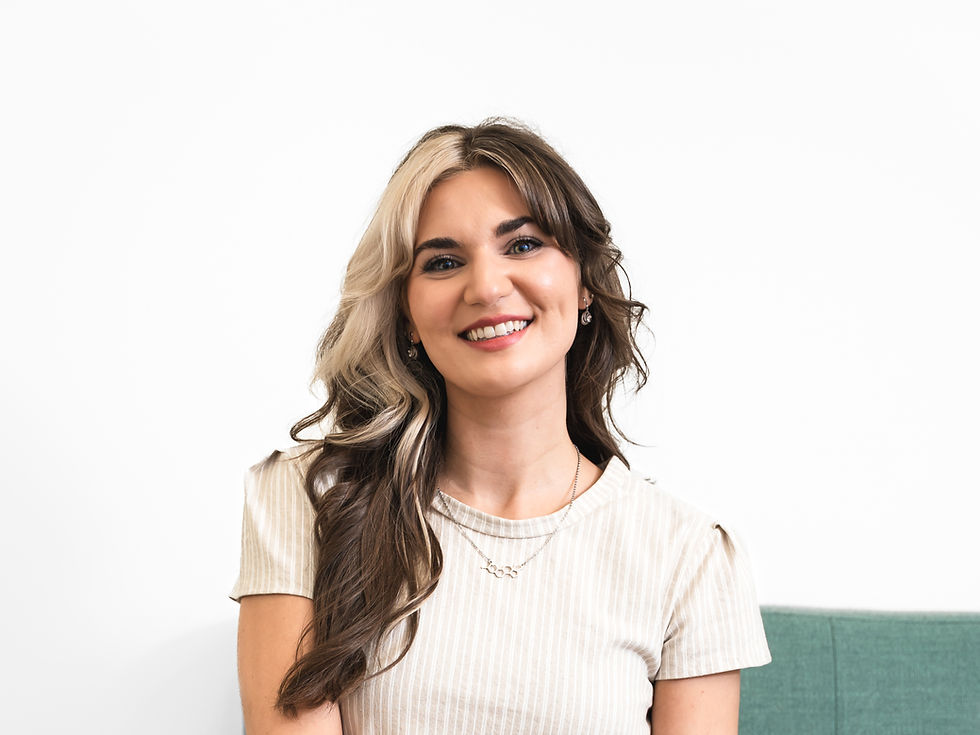
So today I have with me Emily Arthur, and I love that you call yourself the Period RD, registered dietician. it, it makes sense because there is so much that goes on with a menstruation cycle, and it's crazy.
I wish we could kind of be like the car and just plug it into the dash and get all the readings.
Exactly. Exactly.
Well, let me tell you a little bit about her, and then we'll dive into the questions. She is a registered dietician, so that means that she went through extra schooling for this, and she went through internships for this.
There was a lot of work involved with this. I know because I thought about it and did the research in it. And she is an endometriosis nutrition educator. It's amazing. Food actually can heal or hurt you, so remember that as we listen on. She has a Bachelor of Science degree from the University of Western Ontario and a graduate certificate in sexual health from the University of Alberta.
She also holds a dual license with the College of Dieticians of Ontario and the College of Dieticians of Newfoundland. While she is Ontario based, Emily offers nutrition education globally via Endometriosis 360 Beyond Borders with a weight inclusive and eating disorder informed approach to nutrition care and additional training in embryology?
Yes.
Embryology from the American Society of Reproductive Medicine. Emily helps patients and clients understand their hormones, address reproductive health concerns, and build peaceful relationships with food. So much there. what haven't you done?
when you ask my husband, we joke about this.
he's gotten the question of, "Well, what does your wife do?" And he goes, where do I start? There's a couple of different areas." Hard to pin down.
She works with healing with food, specifically with women.
For sure. Yeah, exactly. It's so interesting, too, as a kind of area of practice, because it wasn't originally where I thought I was going to end up as a dietician, but I can't imagine it being any other way, truly.
Okay, let's start right there. Yeah. So why did you end up switching where you originally thought?
Yeah, so when I was doing my internship, the two areas that I just absolutely fell in love with were the intensive care unit and the surgical unit. I thought they were incredibly interesting. I really enjoyed, medical nutrition therapy.
I did a lot of enteral or tube feeding nutrition, a lot of, parenteral or IV nutrition feeding prescriptions along with the team there. and I just thought it was so incredibly cool to watch how nutrition was so, as you say, healing in these really, really critical situations. And I knew that those weren't entry-level positions.
And so when I graduated from my internship, I was really, really privileged, really lucky. There was a family health team or a kind of family health clinic in the hometown where I, come from, and so I took on a dietician position there. It was pretty general. Could see just about everything. a lot of general nutrition education, diabetes management.
And in my mind I was thinking, "You know what? I'll get some really good years under my belt here, and then see where I could maybe advance. Maybe I do eventually move back into a hospital environment and working in some of those more kind of complex areas, more advanced areas." And I started seeing this trend of women coming to nutrition sessions, and while it wasn't while- why they were there and while they were there kind of situation, as we would go through assessment questions and as I was kind of getting to know the biggest concerns in their life and their health, I was starting to see this trend of women having concerns around irregular menstrual cycles or really painful periods or trying to get pregnant and having a really tough time with that, or women who were experiencing all these kind of odd symptoms and hearing perimenopause being thrown around and not really sure what to expect.
And I thought, this, this actually would be an area that I think I'd like to get into more." I knew that I really liked pregnancy. I really liked lactation nutrition. I can vividly remember many, many times finishing those appointments and thinking, "God, I have the best energy level. I feel amazing.
This was such a great conversation. I feel like this was really cool, really interesting." and so it felt really natural then to start studying within more women's health, reproductive health. and so I, I ended up moving into private practice because there wasn't any opportunities to do that in a clinic environment or hospital environment then.
and so it was a lot of research, some late hours, and at one point I became aware that there was a graduate certificate program out of the University of Alberta in sexual health, and I thought, "Bingo. This is great. This is another way to really advance that." And I- it was a fantastic program. I did that over, I believe it was a year, year and a half, something like that, and found it incredibly interesting.
I was the only dietician in my cohort. Lots of incredible public health nurses, therapists, sex therapists in that group, but I was the only dietician, and that really illustrated for me how much of a need that we had there. And, and then kind of practicing, in the world of, of reproductive health and now noticing how important nutrition is alongside other modalities like medicine, and my tagline being "From first period to last period."
And so the, the tagline, The Period RD, came from that, the title, and, and I have hung out in, in reproductive medicine and gynecology, ever since.
That's amazing. That reminds me, I had my physical today, and I normally fill out my paperwork way before, but I filled it out yesterday. And in that it was asking when my last Pap smear was, and I was and I had that, "Wait, I was supposed to have it normally this month."
Mm-hmm. I had to call them because even doing the search within my Google Calendar, I couldn't find it, and I had that, "Am I on your schedule? 'Cause if not, can I be?" something's weird here. Yes. Yeah. I'm good. It's in November or, actually in December, but, it was one of those moments of, "Hold on a second."
You're "Wait a minute. Am I?"
Yeah. "
Have I been going regularly? I thought I'd been going regularly."
I'm taking care of everyone else in the family. Did I forget myself again? I've done that. did that with a flu shot several years ago, and I got really sick.
Oof.
Yeah, great lesson. Take care of yourself, too, not just everybody else So let's go back to the questions I actually prepared.
endometriosis? We should start there.
Absolutely, yeah. So endometriosis is a condition where tissue that is similar to that of the uterine lining starts growing outside of the uterus. It's not identical to the uterine lining, but it has some similarities, particularly that it is responsive to the hormone estrogen, and it can be quite proliferative, meaning it grows.
it doesn't quite grow and shed in the same way that the lining does for a period, but it does seem to have flare and remission-type states. And so we can start to see this tissue start to affect the fallopian tubes, the ovaries. And fun fact for any listeners, the reproductive system is not closed to the rest of the pelvis.
It's actually open via the fallopian tubes because the ovary and the fallopian tubes, all those fun little fimbriae, those fingers, are not attached to each other. There's a space between them. So ovulating is kind of like throwing a baseball into a catcher's mitt type of situation. So inflammatory compounds in some of these lesions or tissue s- that start growing outside of it can leave the reproductive system and affect the surrounding areas of the pelvis, including the bladder or the bowel.
And because the pelvis is so neatly organized, everybody is snuggling within the pelvis, they're also really close to each other, and we can see tissue infiltration. So from the uterus into the bowel, almost kind of like tunneling through and then affecting some of those surrounding tissues.
Yeah. Great place to start.
Okay, so now we have a pretty good idea. This is why when people talk about it, it can be very painful. There's so much involved with this. This is why sometimes if you are diagnosed with it, it means insurance will try to deny things. It can be just a nightmare all around. So this is why there's a need.
This is why the idea of maybe healing yourself without surgery sounds really great place to start, instead of let's get the scalpel. So let's go back to the question I prepared now. When someone with endometriosis searches for what to eat, they can quickly end up with a huge list of what to eliminate.
What does the research actually tell us about nutrition and endometriosis?
Yeah, absolutely. I think that a really important part about this is that worry that you brought up of, "I should be taking out all of these foods." because endometriosis has such a spectrum of experience, but an underlying theme is the digestive system involvement.
It's estimated that between 60 to 80% of folks with endometriosis will experience digestive symptoms like diarrhea, constipation, bloating, even if there is no endometriosis in the bowel. It would only make sense that we would be trying to look for some sort of relief, right? We're not good at pain. Pain is not good for us.
We would try to look for a, a way to potentially, resolve that or reduce that, especially if there's worry about, am I gonna need a big surgery? I, am I... I don't know if I wanna take medications or not, and so food becomes that first thing we think of. Right now, for better or for worse, the research shows us that no single nutrition intervention is considered the nutrition intervention for endometriosis.
There is not currently an endo diet. There is not a single eating pattern that fits everybody, and this is likely because of how variable the experience and the symptoms can be, right? Someone might have zero pain with bowel movements. They might have no constipation, no diarrhea at all, and another person might have significant symptoms.
It's very challenging for them to eat. And so that changes how we approach nutrition, and we have to consider baseline eating patterns, right? If someone has a generally well-rounded and kind of recommended by guidelines eating pattern, then it might look different than someone who already struggles with some of those initial nutrition recommendations and some of the ways that eating may be supportive as well.
And not all endometriosis cases are the same. Not all endometriosis is progressive, and not everybody with endo has pain correlated to its significance or its severity. So even on top of that, we have this extra layer of complexity that makes it hard to nail down a single intervention Most of the nutrition research we have right now for endometriosis looks at some of the lifestyle risk factors for deve- developing endometriosis, but not necessarily nutrition patterns that are part of treatment or alongside other treatments for endometriosis, which poses a bit of a challenge when folks are thinking about how they should possibly be eating or how to manage their symptoms.
The Mediterranean diet seems to be having a bit of a heyday these days, and research shows us that it does have some merit, and it seems to be that it's more significantly related to its overall health-promoting benefits for digestive health, cardiovascular health, cognitive health, versus something that's very specific to endometriosis.
We know that it is elevated in antioxidant intake. It's higher in fiber content, especially soluble fiber, which is a, a soaking fiber. We found that to have some estrogen binding capacities. It's rich in lean proteins, unsaturated fats, and in really highlighting these foods ends up naturally displacing things that might be higher in saturated fat, in sodium or salt, and added sugars.
So in general, has some nutrition benefit to it. We are, starting to see some more research on the specific use of the Mediterranean diet for endometriosis. I actually had the privilege and the pleasure, of participating as a, research kind of, not assistant per se, but as part of a research team, that used the Mediterranean diet as an intervention for endometriosis, treatment alongside other modalities and assessing the feasibility of it and before-and-after outcomes.
so curious to see how that comes out, when we do publish that, in the coming months, coming years. And while some folks might benefit from food eliminations like FODMAPs or dairy or gluten, the research right now really lacks any strong evidence to support this kind of suggestion across the board for everybody.
It very, very heavily encourages a detailed nutrition assessment by a specialized dietician to actually find out if elimination is necessary. And so what can be really interesting and sometimes confusing and frustrating for folks is that we don't necessarily have a singular eating pattern for endometriosis, but there's lots of different components of eating that might be supportive for endometriosis management.
Sounds like the answer for most things food related- Mm-hmm ...
is
very individual.
I wanna get a T-shirt made. It says, "My favorite food is nuance," because it very much is nuance.
And it's so Western culture, the one size fits all, and-
Mm-hmm ...
we really need to get away from that.
Very much so.
Yeah, you already kind of answered my second question. It sounds like Mediterranean diet could work for some, but not all.
Okay. So let's go on to my third question, which is you take a weight inclusive and eating disorder informed approach. How can someone experiment with nutrition for endometriosis without becoming afraid of food or making their diet unnecessarily restrictive?
I can see how that could be very balancing, that fine line.
Exactly. And I think that it's often because we have this really binary thinking about eating in general, right? And I think that, as you said, that Western, very individualistic culture ties into it, that you are either following this really, really restrictive, really, really detailed nutrition protocol, or obviously you're just doing absolutely nothing, right?
There isn't really a lot of in between, and I think that it feels really challenging for folks to conceptualize the idea of nutrition changes that aren't rooted in trying to change that the way the body looks or appears, its weight, and still integrates therapeutic components that can benefit a condition like endometriosis.
I think what's really important as a baseline, and this was something that I have found in practice and in some of the research that I have done, that really is a challenge for folks with endo, is making sure there's a baseline of eating enough in the first place, right? We cannot eat better if we are not eating enough, and I, I can't even take the credit for that particular phrase.
I get that from, Clara Nosek, who is on Instagram as your dietitian BFF. Definitely recommend, following for any listeners out there, for some great nutrition content. Because there can be so significant of digestive symptoms and pain potentially impacting somebody's ability to eat, we often see that folks are eating very small amounts or they're eating very irregularly.
There's really big gaps of time between eating opportunities, and as a result, makes it harder for the digestive system to work well, and also hard to have the energy to do what you need to do in the day. I heard a really great phrase a couple weeks ago that you can do it tired, you can do it scared, you cannot do it hungry, right?
I think of all the times in my own life that I have tried to just push through when I've been hungry, thinking, "I'll, I'll eat in a second, I'll eat in a second," and you're not nearly as productive versus when you have something in your stomach, when you have some energy to work with, and so- One of the very first things that we really challenge is the idea that eating less or eating less often will minimize the pain, and we flip that on its head that eating more often and actually eating enough strengthens the digestive system and helps to resolve many of those symptoms, even as a really fantastic starting point.
The next level kind of up from that we look at is how do we space fiber intake out over the day, right? When we think about the Mediterranean diet, when we think about just general digestive health, we're usually thinking about fiber. And the big mistake I think we sometimes make is going too much, too young, too fast.
We've got way too big of fiber servings in very short periods of time, which- Sounds good in theory. We know we're aiming for quite a bit of fiber in the day, and yet all at once usually irritates the digestive system. We've got gas, we've got discomfort happening, right? That spacing fiber out over every single eating opportunity helps us to meet our needs and stabilizes digestive function.
Nothing wild and crazy is kind of going on there. Even without taking anything out of an eating pattern, we really start to boost antioxidant intake, lots of variety of things like fruits and vegetables. So it doesn't ask anybody to have to avoid certain foods. It's simply seeing it as an additive approach, and recognizing where there might be hesitation in adding things in.
If there's been really long-term digestive symptoms, really long-term pain, we almost kind of sit with that discomfort of, yeah, this is new, and this might feel a little uncomfortable. Let's gradually add this in and help to build that safety, build that trust in the body again. And a layer that I also think gets missed in general for endometriosis care, but especially in nutrition, is building awareness of the context that can create a higher risk for digestive upset.
And this is actually something that we've been really, really passionate about doing through Endometriosis 360, helping folks understand that it's not these singular domains of, the physiotherapy and the physical movement side of things, or mental health and stress, or eating patterns and food choices as these singular triggers for pain or for digestive upset, but that they all actually interact with each other and can create context or some, again, nuance where there either is a higher risk for symptoms happening, and here's how we tackle that without trying to shut the whole system down, and these are some of the contexts where that risk is a lot lower, and it's easier to see some of that pain and symptom reduction.
So inadvertently, as we're addressing eating enough, eating a variety of foods, and starting to build some of that awareness, some of that body trust, we actually end up better supporting nutrition status for endometriosis and allowing the body to settle back into a routine, address some of those symptoms without asking somebody to start significantly tracking their food intake or restricting a bunch of stuff or tracking their weight and expecting that to be their biggest priority or biggest concern, and, and very much seeing it as a whole person approach, without, again, creating that fear of food or creating that restriction on top of it.
It's so hard. I interviewed somebody who, struggles with bulimia. Mm-hmm. And it's not like smoking where you can just cut it out. Mm-hmm. Because you need food to live.
Exactly.
And struggling with something like that in any relation to food and your body, just my heart goes out to people.
We often say that it's about the food, but it's not about the food at the same time, and it is finding this intersection of how were the ways that someone has been coping previously kind of worked for them, right?
What was this behavior addressing for them? How do we address the thing for them and also now create behaviors that are a little bit better suited for long-term use and don't come with some of those long-term, risks as well? It is a significantly challenging area. I feel very privileged every day to get the opportunity to be with folks in those situations.
I've done some really awesome, listening in on different self-compassion practices. I've been really interested into the work of, Dr. Kristin Neff, who runs the Self-Compassion Institute. As embarrassing as it is to say, I just learned this year, 2026, that self-compassion translates to sitting with the suffering of the self, and compassion being to sit with suffering.
and I think as a practitioner, and as a person as well, we are so encouraged to be very clinical and to have these really detailed guidelines. And if it's just super, super specific and they just follow the rules, they follow this outline, it will get better for them. And we forget that there's also that element of being really human with other people, right?
Being with them in these times of need, in these times of suffering, and not asking them to change, just asking them to be, and to be there with you in it. It's, it's incredibly interesting of an area, incredibly difficult of an area, definitely.
Yeah. Absolutely. So I'm gonna ask you a question that'll be answered in the newsletter.
So this is getting you to be part of her work that's going to be in my newsletter. If she has thoughts that she wants to further clarify for us, it'll also be in the newsletter. So jump over there. But this part: endometriosis can affect pain, digestion, energy, periods, and fertility. Does nutrition need to look different depending on which symptoms or goals someone is trying to address?
We have a little bit of the answer from earlier, but she'll continue that discussion in the newsletter. And then for those who are not willing to wait, who are a little more like me, especially if they're raising their hand, they need this help, where can they find you?
Yeah, so I can be found, on Instagram at emilytheperiodrd.
For folks who are in Ontario, you can find me at Brandt Nutrition, where I work alongside some incredible dieticians. We all have a different specialty area, so my specialty, is within women's health and reproductive health, and I have a colleague who is more specialized in gut health and brain health, and that connection between the two, and a colleague who specializes in pediatrics and eating disorders.
So that's where I am found for my one-on-one care. And then I can be located at Endometriosis 360. We actually have just recently launched our Beyond Borders program. So for folks who are outside of Ontario and they're looking for an interdisciplinary education model that really supports this kind of collaborative and interconnected understanding of endometriosis, there's myself, our lovely pain and health psychologist, Dr.
Laura Katz, our pelvic health physiotherapist, Jill Mueller, and our medical director, Dr. Matthew Leonardi, where we do group education and some consultations for folks in Ontario as well. so you can find me in all of those places. I can also be found writing for funsies on Vocal as Emily the Period RD, where I share lots of things about hormone health and reproductive medicine with nutrition in mind.
Well, thank you, and it sounds like we don't need to be in Canada to work with you in one way, shape, or form, so-
Exactly ...
yeah. Well, thank you for being on and for this conversation. I know so many people close to me that have struggled through this, and they kind of just feel woo, once they're done having kids, but that doesn't mean that the pain stops or that the other symptoms stop, even though they're done.
They've closed the chapters of childbirth, the child-rearing years, and it can be a lifelong, debilitating... It's a disease, right? You call, you classify- Yeah ... this as a disease. A disease.
Yeah.
And it can affect every area of life because of it. So-
Absolutely ...
take this, for what it's worth, share it with people that you know, bookmark it for when you come across people, because there is so much involved with endometriosis, and there's so many people who aren't- Aware or vocalizing it until they are looking at why they have infertility problems or why they're having miscarriages.
And once they finally get that, they realize, "Oh, and it's caused this, this, this, and this that I've been ignoring or trying to see specialists for, not realizing that it's all related." So thank you for this conversation. It's very needed. And thank you for your time and for how much you're sharing with the world that you're learning.
Thank you. Yes, if, anyone is sharing this with others or you're listening to this for yourself, the research shows us the sooner that we start accessing care, we start speaking out about your pain, the better outcomes are when you pursue treatment. The pain you experience is real, it's not in your head, and it's not something that you need to suffer through long-term.
You deserve care. You deserve wellness, if I may, in every season.
Hey. Well, thank you. Thank you for this, and I hope everybody has a wonderful day, including Emily.
Thank you, thank you. It has been a pleasure.
Thank you so much for joining our discussion. If you enjoyed this, please like, subscribe. Most of all, share the love with others. Please share this episode so that we can help other people really recalibrate every aspect of their lives so they can be the best version of themselves, and I will see you in the next episode.
I want to have my quick disclaimer here that this is not a one-size-fits-all. If you want one-on-one coaching, let's talk, and we will make sure what wellness means to you is really put into your life, put into practice. I am using my undergrad in applied health and my life coaching experience to bring this podcast to you


